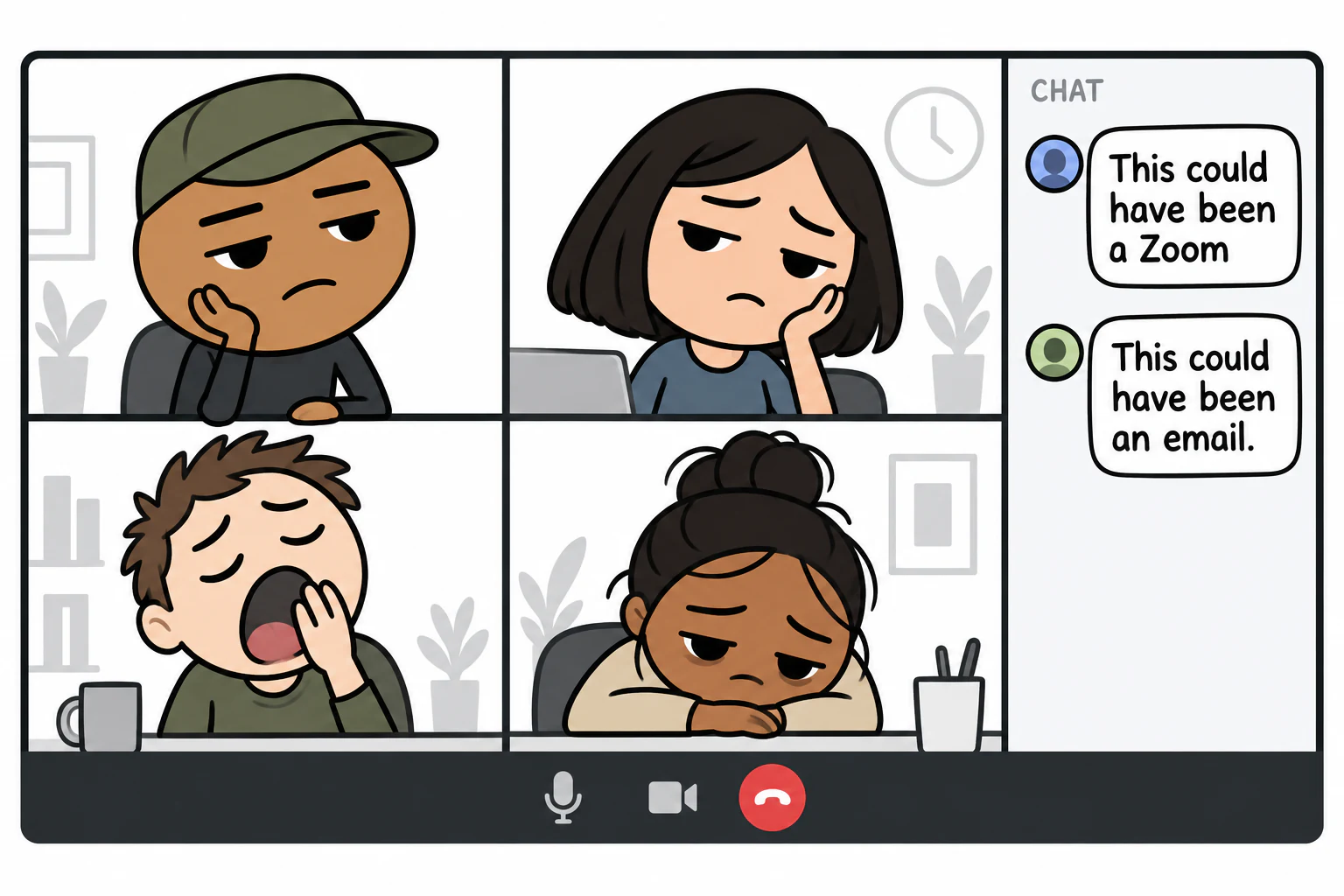
Another meeting that was a waste of time and the worst part about this one was it was with one of our high-paying clients. We were on for over half an hour. We went through leads, bounced over to ad ideas, and burned more than ten minutes trying to fix an app on a phone, only to find out the client doesn't even work from a phone. When I hung up, it felt pointless, like nothing had changed. Just a waste of oxygen. I hated the feeling of wasting a high-value client’s time, it devalues the importance of meetings and his perception of our service.
Why was this such a bad meeting?
- We went over things that could have been a Loom video.
- We weren't prepared. We set and freestyled the meeting same day.
- We never set an end time, no one knew when they could escape.
- It didn't solve a problem, save or generate income.
- It didn't get the client better results.
- Nobody walked away with a clear mission or deadline.
I made the mistake of being reactive to a “problem” that needed to be solved. Instead of being proactive and thinking before I responded, I threw a same-day meeting on the calendar with no agenda and no clue what we were actually trying to fix. (Stupid)
The more you waste people's time, the less they look forward to your meetings. Do it enough and they start showing up just to get it over with.
A Meeting Isn't The Solution
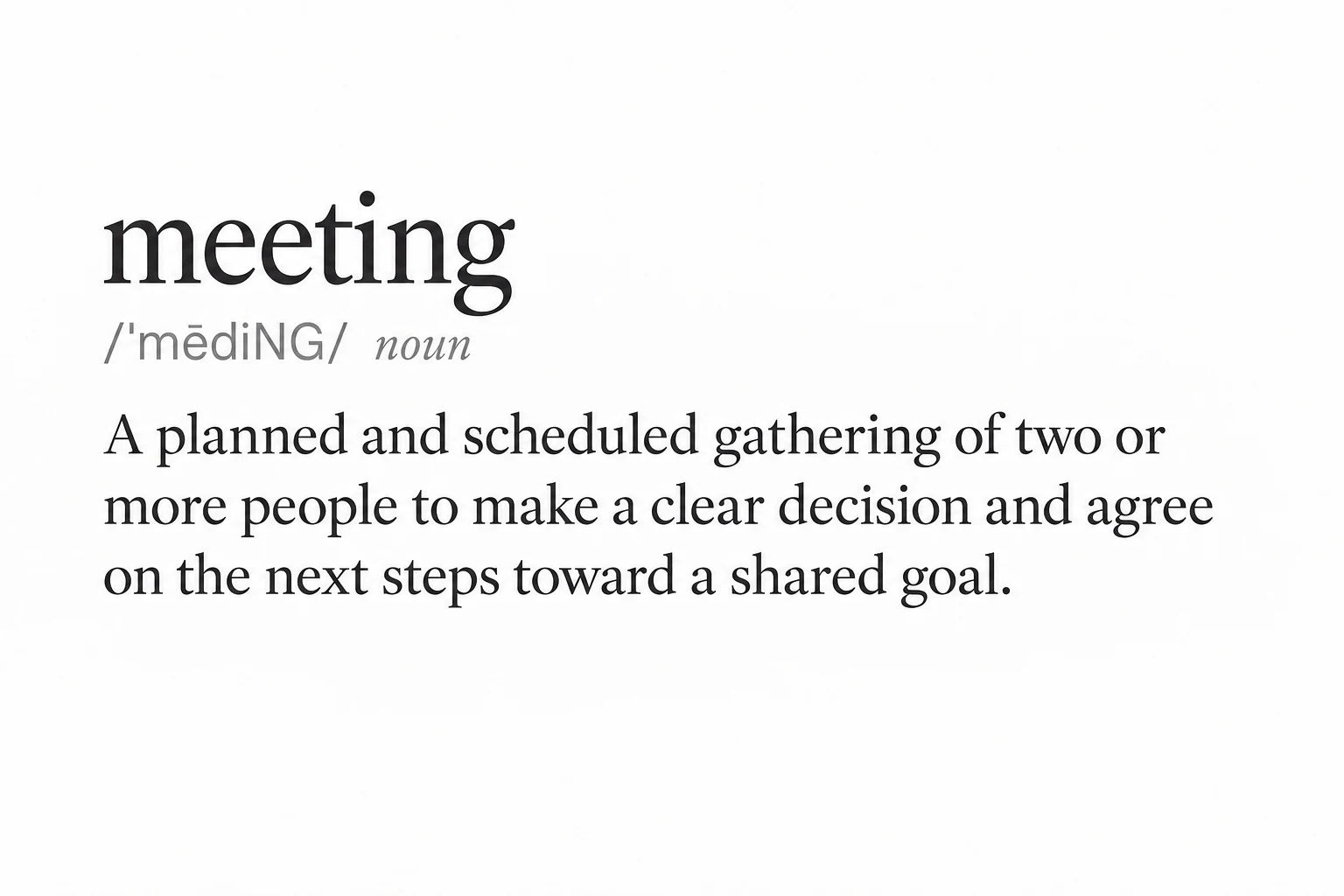
People get meetings wrong. A meeting isn't a communication style or a catch-up session. It's a set time to make one decision, so all parties can move toward a desired goal.
The meeting itself doesn't fix anything, the planning before and the actions taken after do. Stop treating the meeting like the fix, use it to decide what the fix is and who's the owner of it.
Before You Book The Meeting
Before you put a meeting on anybody's calendar, ask yourself these five questions. If you can't answer all five, don't book it.
Ask these first
- What's the problem, and what is it affecting? Say the one problem in one sentence, then name what it's hurting: sales, a client, your team, or your time.
- Can this be a Loom video? If you're just giving an update or showing how something works, record it and send it.
- Who needs to be here, and why? If they can't help make the decision or own the work, they don't need the invite.
- Are we prepared? You should already know the one decision you need to walk out with.
- Does it make money, save money, or get the client better results? Rule number one is don't lose money. If it won't do one of those, it's not worth anyone's time.
No freestyling, absolutely none. I've never seen a productive meeting come out of someone winging it. If you're not prepared, reschedule and tell them straight: "Hey, I'm not ready for this one, can we move it?" They get their time back, and they'll respect your meetings more for it. Better yet, don't book it until you're ready.
Never book a same-day meeting. No rushing, and no Zoom link fired off an hour before. Prep it first, then book it at least 24 hours out. The only exception is a real emergency.
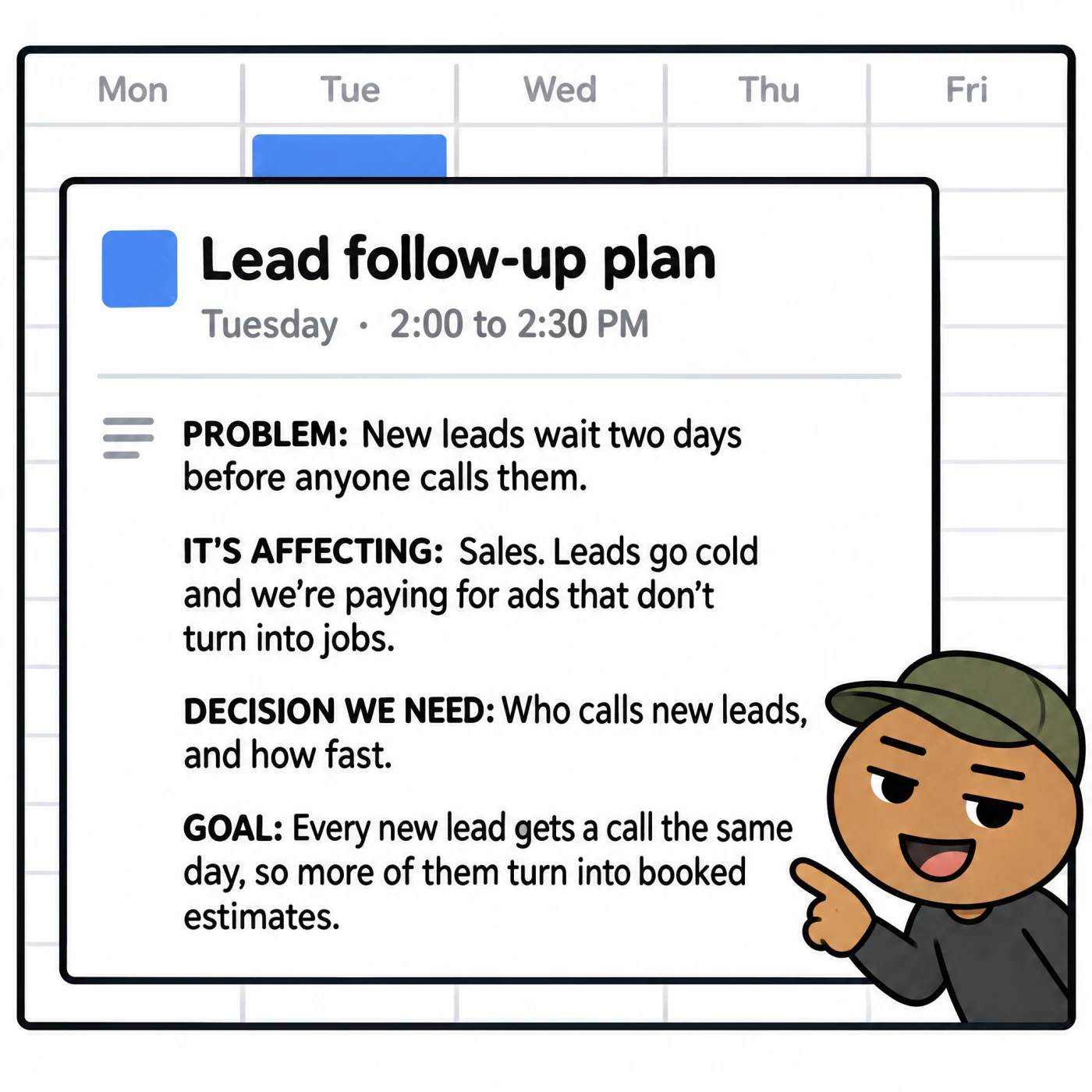
No Agenda = No Meeting. Once you're prepared, put that prep right in the Google Calendar invite: the problem, what it's affecting, the decision you need, and the goal. That way everybody walks in ready instead of guessing. Here's how the invite should look:
Bonus Tip: The $500 Test
Before you send the invite, ask yourself one thing: if this meeting cost $500 out of your own pocket, would you still have it?
If the answer is no, don't book it. A quick Loom or a text will do. This one question makes you think about what a meeting is really worth.
The Better Meetings Framework
I borrowed three questions from Alex Hormozi: What's the problem we're solving? What do you want to have happen? What would it take? Then I made them my own. Once a meeting is worth having, run it with these four steps.
Watch the clip: Alex Hormozi, the three questions (youtube.com/watch?v=X39rITUMEPA, 33:26 to 34:28)
1. Pick One Problem
Every meeting should solve ONE problem. Once you stack two or three, the meeting drags and nothing gets finished. Pick the biggest fire, the one hurting the business or the client the most right now, and solve that. Then book the next meeting for the next problem.
Same goes for the people in the room. Nobody can fix three things at once, so give one person one problem and a deadline, and when it's done, move on to the next one. One problem also keeps the invite list short: only the people who can fix it need to be there.
Example: New leads wait two days before anyone calls them.
2. Name The Outcome, Then Ask Why
What do you want to have happen? Say it so clearly that anyone could look later and tell if it worked.
Then ask why, and don't stop at "because it fixes the problem." It fixes the problem and what? Does it push you toward your revenue goals? Does it get your client better results? Does it make or save money? Does it grow the company?
Example: Every new lead gets a call the same day, so more of them turn into booked estimates and more revenue.
3. Simplify The Solution
Come up with three solutions. You probably already know the one you're going to pick, and that's fine, come up with three anyway. It trains your brain to look at the problem from a different angle and challenges your problem-solving skill (you'll need this skill forever).
Pick the solution that:
- Has the least resistanceIt's the easiest one to get going.
- Is the fastestIt gets you a result the quickest.
- Makes the most impactIt moves you closest to the outcome you named in step 2.
- Uses the least amount of resourcesIt won't burn your cash, your time, or your team's energy.
Then simplify it even more. When you overcomplicate things, nobody follows them and they break. Make it so easy a kindergartner could do it.
Example: Hire someone new to call leads, buy software that texts them automatically, or have the front desk call every new lead before lunch and before close. The third one costs nothing and starts tomorrow, so that's the pick.
4. Give It An Owner And A Deadline
Who's the owner? What's the deadline? Simple as that.
One person owns it, not "the team," and the deadline is a real day and time. Say both out loud before anyone hangs up.
Example: Sarah at the front desk owns it. She starts calling every new lead the same day on Monday, and we check the numbers Friday at 2 PM.
Never Have That Meeting Again. Make It A System
So you don't end up having the same meeting over and over, ask yourself one question every time you solve a problem: how do I turn this into a system? How do you make sure that next week, next month, or with the next client, you never have to solve this problem again, because it runs on autopilot without a meeting?
The meeting should build the system that comes after it. That way you stop repeating the same things and move on to the next problem in the business.
A system is a simple set of steps that gets the same job done the same way every time, without anyone needing to talk about it. Picture a perfectly systematized version of your business and ask: would this meeting still need to happen? If not, build the system that gets rid of it. More meetings are a symptom of missing systems.
Example: If your team keeps meeting about who calls new leads, that's a missing system. Write one rule: every new lead goes to the front desk and gets a call the same day. Now there's nothing left to meet about.